




College Party Lighting Ideas: Dorm, House Party & Campus Event Guide
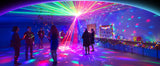
College party lighting works best when it makes a plain room feel intentional without turning setup into a technical production. In a dorm or apartment, that may mean one sound-activated light aimed at a wall. In a student house, it may mean a wash light plus one moving effect. A campus event needs zones, secure mounting and a simple plan that volunteers can run.
This guide covers all three—dorm rooms, house parties and larger campus events—with realistic setups and clear checklists—without assuming you own a professional lighting rig.
Last updated: August 2026
The quick college party lighting plan
Build the setup in three layers:
- Base color: use a PAR or wash light to give the room one consistent color.
- Movement: add one disco, laser or moving-effect light for energy.
- Focus: aim light at the dance area, DJ table, backdrop or photo spot—not everywhere at once.
Start with fewer fixtures than you think you need. A dark dorm room can be transformed by one well-placed light, while too many effects make a small space harsh and visually noisy. For fixture counts by room size, use our party light sizing guide.
| Space | Useful starting setup | Best control |
|---|---|---|
| Dorm room | 1 compact party light | Remote, app, or a gentle sound-activated mode |
| Apartment living room | 1 wash + 1 effect light | Sound-activated or app-controlled |
| Student house or basement | 2 washes + 1 effect on a stand | Sound-activated or master/slave |
| Campus hall or club event | 2–4 washes + 2 effects | DMX or prepared automatic scenes |
| Outdoor campus event | Zone-based lighting on rated supports | DMX or supervised presets |

Dorm party lighting: small space, low glare
Dorm rooms reward restraint. The walls and ceiling are close, so even a compact light produces strong reflections. Instead of pointing a fixture into the center of the room, aim it at a pale wall or ceiling and let the reflected color soften the effect.
A simple one-light dorm setup
- Place one compact party light on a stable desk or shelf.
- Aim it away from beds, windows, and anyone's direct line of sight.
- Choose a slow automatic scene during conversation.
- Switch to a moderate sound-activated mode when music becomes the focus.
- Keep the fixture and its cable away from drinks and walkways.
App control is useful in a dorm because it lets you adjust brightness and color without reaching over furniture. A fixture such as the KeoBin app-controlled party light suits this kind of quick adjustment.
What to avoid in a dorm
Avoid high-speed strobes, haze or fog, unsecured fixtures above head height and lasers aimed across the room. Smoke effects may trigger building systems, and residence halls often have stricter rules than private homes do. Check the housing policy before bringing in event equipment.
Student house and basement party lighting
A larger room benefits from separated layers. Put steady color on the walls, then add movement over the dance area. This looks better than placing every fixture beside the speakers and sending all effects in the same direction.
Recommended layout
- Back wall: two PAR lights or uplights, one on each side, for base color.
- Dance area: one multi-effect party light placed above eye level.
- DJ table: a small accent light so controls remain visible.
- Food and drinks: ordinary warm lighting rather than flashing effects.
- Walkways: steady illumination and no loose cables.
A DJ light with a stand raises the effect above furniture without requiring an improvised mounting surface. Weight the base and keep guests outside its footprint.

Lighting a campus club event, student dance or welcome night
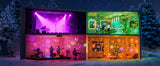
A campus event is not simply a larger dorm party. Guests arrive from multiple directions, the venue may have its own rules, and volunteers often share setup duties. Divide the room into zones before choosing fixtures.
Plan four zones
- Entrance: clear, welcoming light with no fast flashing effects.
- Main activity area: the highest-energy color and movement.
- Stage or DJ position: enough front or side lighting to see performers and controls.
- Social area: softer, steadier light for conversation.
For a multipurpose hall, use PAR lights for reliable color coverage, then add one or two effect fixtures over the activity area. A multi-effect unit reduces the number of separate devices volunteers need to cable and control.
Create scenes instead of changing settings all night
Prepare three scenes: arrival, peak party and closing. Arrival should be bright enough for orientation. The party scene can add faster movement and richer color. Closing should increase visibility so guests can collect belongings and leave safely.
For repeatable cues, use our beginner DMX512 guide. If nobody will operate a controller, choose sound-activated or automatic programs in advance and test them with the event playlist.
Where should college party lights go?
Aim at surfaces, not faces
Walls, ceilings and backdrops spread color more comfortably than direct beams. Before guests arrive, stand in every normal viewing position and watch a complete effect cycle. Re-aim anything that repeatedly produces glare.
Keep light away from windows
Bright effects aimed through windows can disturb neighbors. Angle effects inward and close curtains where appropriate.
Use height carefully
Elevating a fixture improves coverage, but use only a rated stand, clamp, or mounting point. Never balance a light on stacked furniture or a speaker. A properly weighted KeoBin DJ lights with stand kit provides a more repeatable option.
Protect quiet zones
Keep food tables, coat storage, stairs, exits and conversation areas under steady practical light. The contrast makes the dance zone feel more exciting while keeping the event usable.
Sound-Activated, App-Controlled, or DMX?
| Mode | Best use | Main trade-off |
|---|---|---|
| Sound-activated | House parties and quick dance setups | Fastest setup, but less predictable |
| App-controlled | Dorms and small rooms | Easy adjustments; keep a fallback mode ready |
| Automatic | Entrances and unattended zones | Reliable, but may not match the music |
| DMX | Student dances, stages and scheduled events | Most precise, but needs programming |
Our comparison of sound-activated, DMX and app-controlled party lights explains the choice in more detail. For most informal events, a tested sound or app mode is better than a complicated controller nobody knows how to use.
Are laser lights a good choice for college parties?
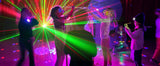
Yes—party laser lights are a fast way to create visible movement across a dance area, especially in a student house, basement, campus hall or club venue. RGB lasers and 3D animated effects can cover more visual space than a small wash light, but they should be treated as a focused effect layer rather than the only source of light.
Where 3D party laser lights work best
- Student house or basement: aim animated patterns at a clear wall, ceiling or backdrop.
- Campus dance or welcome event: use a controlled laser effect over the main activity zone while keeping entrances and social areas under steady light.
- DJ booth or stage: combine the laser with a PAR wash so performers and controls remain visible.
- Dorm room: choose a compact, low-intensity effect only when residence rules permit it; reflected color or an app-controlled party light is often the simpler choice.
Laser, disco effect or moving head?
Choose a laser when you want sharp beams, animated patterns or a high-energy focal effect. Choose a disco-ball or derby-style light when you want broader rotating dots and patterns with less programming. Choose a moving head when the effect needs to travel between several zones. Our disco laser vs. disco ball comparison explains the visual differences, while How to Use Laser Lights for a Home Party covers a smaller-room setup.

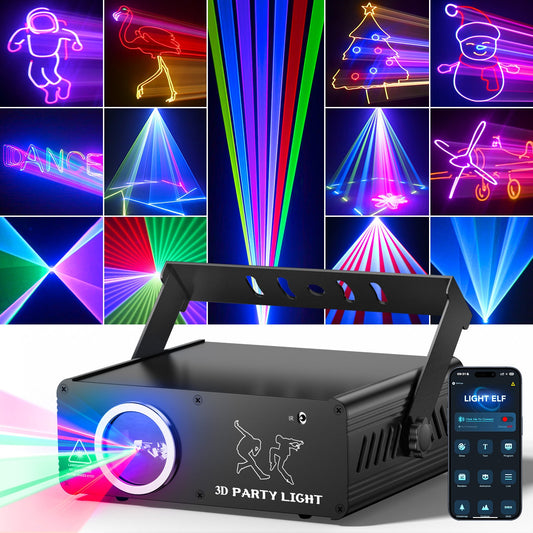
A 3D RGB laser option for larger party spaces
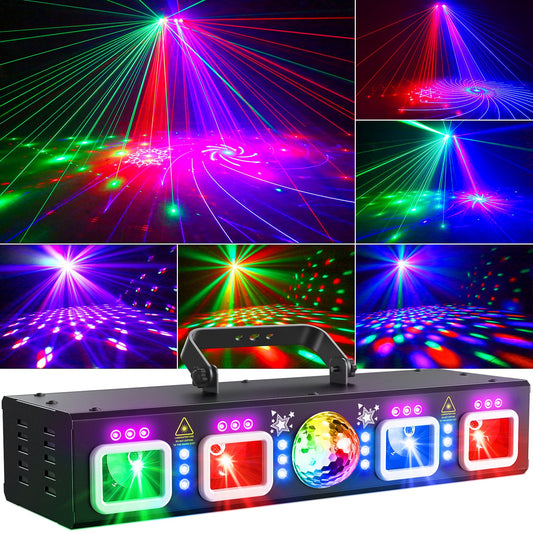
The KeoBin L2600 adds animated RGB laser patterns, sound activation and DMX512 control for student dances, DJ parties and campus events. Use it as the focal effect alongside steady wash lighting.
View the KeoBin L2600 RGB Laser Light → Browse Stage Laser Lights →
Three realistic lighting budgets
Under $120: one-zone setup
Choose one multi-effect light for a dorm, apartment or compact dance area. The KeoBin L2800 5-in-1 DJ Party Light combines several effects and is easier to transport than a multi-fixture rig.
About $150–$250: elevated party setup
Use one multi-effect fixture with a proper stand, or combine a compact effect with one wash light. This is practical for student houses and small club events.
$350 and up: layered campus setup
Build around two or more PAR washes plus controlled effect lighting. Reserve part of the budget for stands, rated cables, cases and safety accessories—not only fixtures.
Choose party lighting by space
Dorm: one compact app-controlled or sound-activated light. Student house: an elevated multi-effect fixture plus steady wash. Campus hall: PAR coverage with planned effect zones.
Shop Party & DJ Stage Lights → Explore DJ Lights with Stand →

College party lighting safety checklist
- Get approval from housing staff, the venue or student organization where required.
- Keep exits, stairs, and walkways well lit with steady illumination.
- Do not daisy-chain power strips or run loose cables through guest paths.
- Use rated stands, clamps and safety cables; never improvise overhead mounting.
- Keep fixtures and power connections away from drinks, rain, and other moisture.
- Check strobe, haze, fog and laser rules before the event.
- Never aim laser output at guests, windows, vehicles or aircraft.
- Assign one person to check the lighting during the event.
The U.S. Fire Administration publishes campus fire-safety guidance, and the FDA explains laser classifications, risks, and requirements. Follow the fixture manual and venue rules. Our Stage Lighting Safety 101 provides a fuller checklist.
Frequently asked questions
What is the best lighting for a dorm party?
One compact app-controlled or sound-activated party light is usually enough. Aim it at a wall or ceiling, and keep it away from drinks and anyone's direct line of sight.
How many lights do I need for a college house party?
For a typical living room or basement, start with two wash lights and one elevated effect light. A very small room may need only one multi-effect fixture.
Are laser lights allowed in dorms?
Rules vary. Check the housing policy first. Never use a laser without understanding its classification, intended use and safe beam path.
Is sound-activated lighting good for a campus event?
It works for informal dance areas when tested in advance. For entrances, ceremonies or scheduled cues, automatic scenes or DMX are more predictable.
How can inexpensive party lights look better?
Use fewer effects, raise the main fixture safely, aim color at surfaces, and separate the dance area from food and conversation zones.