

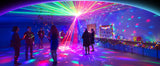
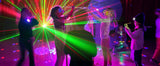



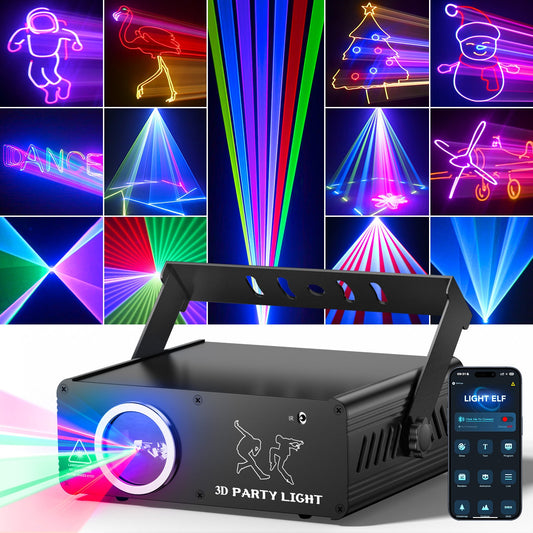

Disco Laser Light vs. Disco Ball Light: Which Is Better for Your Party?
Short answer: choose a disco laser light when you want sharp beams, patterns and high-energy movement; choose a disco ball light when you want softer, room-filling color with a classic dance-floor feel. For most home parties and small events, a multi-effect fixture that combines laser patterns, rotating color, wash and strobe delivers the most flexible result.
The terms sound similar, but the effects are not interchangeable. This guide compares disco laser lights and disco ball lights by look, coverage, setup, music sync, control and venue size—so you can choose a party light that fits your room instead of buying the brightest specification on the box.
For a broader look at fixture choices beyond lasers, see our LED vs traditional stage lighting comparison.
Disco Laser Light vs. Disco Ball Light at a Glance
| Feature | Disco laser light | Disco ball light |
|---|---|---|
| Visual style | Defined beams, dots, patterns and graphics | Moving color spots and broad rotating coverage |
| Best atmosphere | Energetic, modern, DJ-style | Classic, colorful, relaxed dance floor |
| Visibility in the air | Strongest with suitable haze where permitted | Primarily visible on walls, ceilings and floors |
| Coverage | Directional; depends on scanning angle and placement | Wide room coverage from a rotating lens |
| Control | Often auto, sound-active, remote, DMX or master/slave | Often auto, sound-active and remote; some support DMX |
| Best for | DJs, bars, karaoke, stages and high-energy parties | Birthdays, home parties, dance floors and ambient movement |
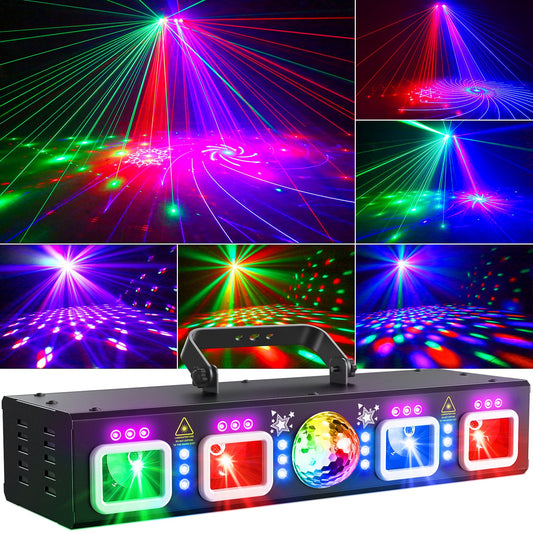
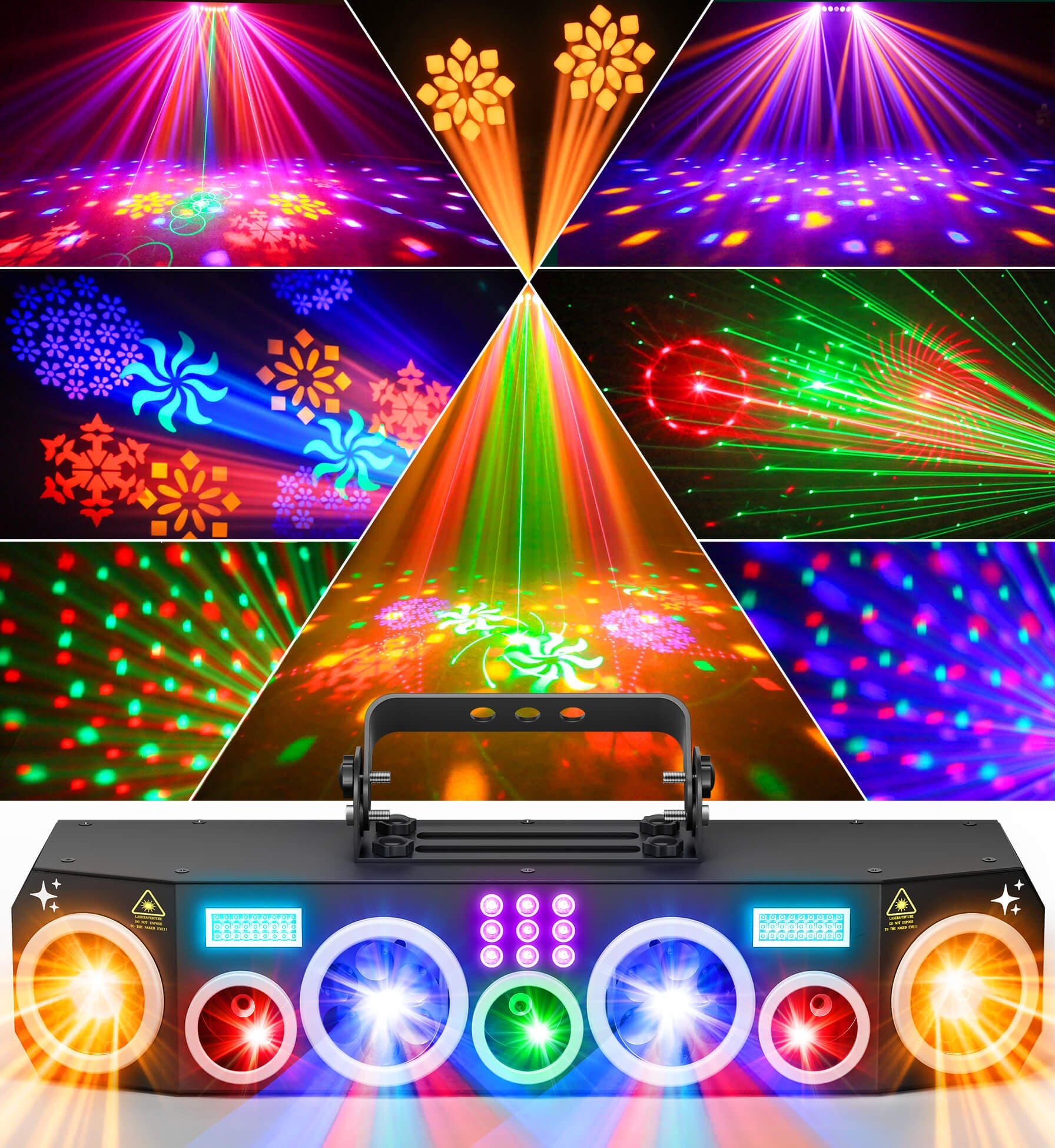
Best overall choice for mixed events: the in-stock KeoBin L2700B 7-in-1 stage lighting system, which combines rotating color, laser, wash, strobe and pattern effects with flexible control for home parties, DJs and small venues.
What Is a Disco Laser Light?
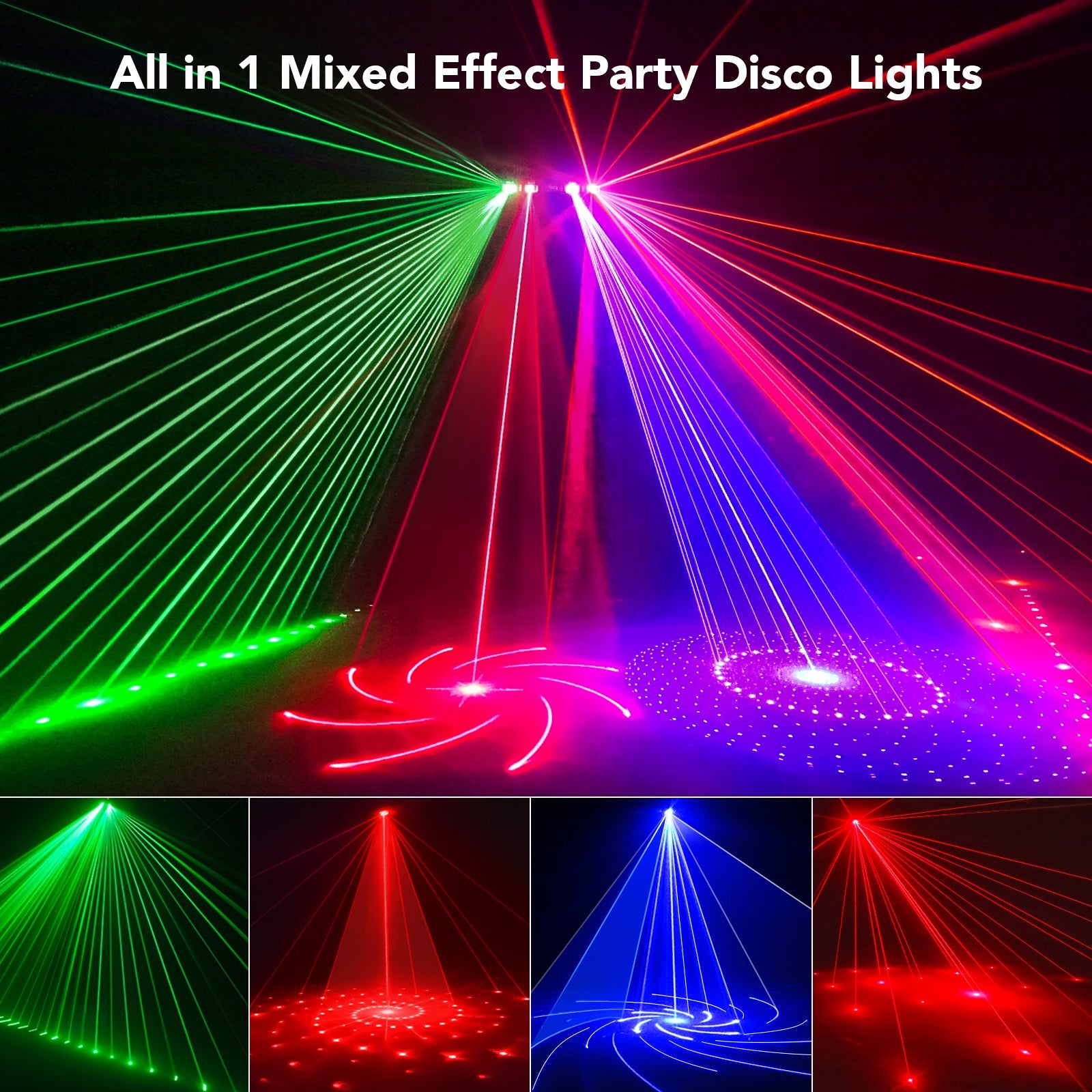
A disco laser light uses concentrated laser sources and moving optics to project beams, dots or patterns. Compared with an ordinary LED wash, the edges look sharper and the movement feels more deliberate. That makes laser effects useful when you want a room to feel like a DJ booth, club or small stage.
Laser party lights are especially effective for:
- music drops and high-energy dance moments;
- karaoke rooms and birthday dance floors;
- mobile DJ setups that need strong visual impact from a compact fixture;
- bars and small venues that want defined movement across a room;
- layering over a color wash to add detail and depth.
A laser is not automatically the right choice for every space. Placement matters. Aim effects only into the intended display area, secure the fixture, follow the product manual and comply with applicable laser-safety rules. For primary-source guidance, review the U.S. FDA overview of laser products and instruments and the International Laser Display Association laser-safety resources. Never aim laser effects toward faces, roads, windows, aircraft or reflective hazards.
What Is a Disco Ball Light?
A disco ball light usually uses LEDs behind a rotating faceted lens. Instead of projecting sharp laser graphics, it scatters moving colored spots across several surfaces at once. The result is broad, familiar and easy to enjoy even without haze.
This type of party light works well when the goal is quick transformation rather than precise programming. Place it where the rotating effect can reach the ceiling and two or more walls, switch on a sound-active program, and a plain room immediately feels more animated.
If you prefer colorful rotating coverage with added strobe and pattern effects, compare the KeoBin L2500 4-in-1 disco ball light. For a larger all-in-one system with more effect layers, explore the KeoBin L2700B 7-in-1 stage lighting system.
Which Effect Looks Better in a Real Party Room?
“Better” depends on what the room is missing.
Choose laser when the room needs definition
Laser patterns create focal points. They can make a compact DJ area feel more intentional and give guests something visually sharp to follow. In a room already filled with colored ambient light, a laser layer prevents the scene from looking flat.
Choose a rotating disco effect when the room needs coverage
Moving RGB spots help fill blank walls and ceilings. They are forgiving in living rooms and multipurpose spaces because the effect is designed to spread, not remain focused in one direction.
Choose a multi-effect light when the event changes mood
A birthday party may begin with background music, move into karaoke and finish with dancing. A multi-effect fixture lets you start with a softer wash, add rotating color, then bring in strobe and laser patterns when the energy rises. One light can create several scenes without adding cables and stands around the room.
How to Choose by Room Size and Event Type
Living room or small home party
Prioritize simple control, moderate brightness and wide surface coverage. One well-positioned multi-effect party light is often more useful than several small lights pointed randomly. Mount or place it above eye level when the manufacturer permits, angle it toward the far wall and ceiling, and keep direct beams away from guests.
Birthday, karaoke or gaming room
Sound-active mode is the easiest way to keep effects moving with music. Look for adjustable microphone sensitivity, because a setting that works beside a loud speaker may not respond properly across a quiet room. Rotating color plus laser patterns creates a fuller scene than either effect alone.
Mobile DJ or small event venue
Choose DMX512 or master/slave capability if you need repeatable scenes or synchronized fixtures. DMX lets you coordinate color, movement and strobe timing instead of relying entirely on automatic programs. For standards background, consult the ESTA Technical Standards Program published documents. If DMX is new to you, use our beginner DMX512 lighting setup guide to plan addresses, cables and basic scenes.
Wedding or formal event
Use restraint. Start with a smooth wash or slow rotating effect during arrivals and dinner, then introduce faster movement later. Strong strobe and rapid patterns can be effective on the dance floor but distracting during speeches and photography.
Five Buying Factors That Matter More Than Effect Count
- Control that matches your skill level. Remote and auto modes are ideal for quick home use; DMX is valuable for programmed shows.
- Useful coverage. Match the projection angle and placement to the room rather than judging only by power.
- Independent effect selection. Being able to run laser, wash, rotating color and strobe separately makes one fixture suitable for more events.
- Sound sensitivity. Adjustable response helps the light react consistently to real music volume.
- Safe mounting and positioning. A stable installation is more important than adding another effect to an unsecured fixture.
Before buying several units, read how many party lights you need for different room sizes. Better placement often produces a stronger result than simply increasing the fixture count.
A Simple Setup Plan for Better Results
- Choose the main effect surface. Decide whether the ceiling, back wall or dance floor should carry most of the movement.
- Place the light off the floor. Use a stable surface or properly rated mounting system and follow the manual.
- Test one effect at a time. Check rotating color, wash, laser and strobe separately before combining them.
- Set sound sensitivity at event volume. A quiet test can produce the wrong setting for a crowded room.
- Build energy gradually. Begin with slower color movement, then add sharper patterns and strobe during active dance periods.
- Check sightlines. Walk through guest areas and correct any uncomfortable or unsafe aiming before the event begins.
For a complete home setup workflow, see how to use laser lights for a home party.
Common Mistakes to Avoid
- Pointing every effect at the same spot. Spread wash and rotating color broadly while using laser patterns as a defined layer.
- Running maximum speed all night. Constant intensity becomes tiring and leaves no room for a visual “build.”
- Testing without the actual music volume. Sound-active performance depends on speaker position, bass and microphone sensitivity.
- Ignoring ambient light. Bright ceiling lights can wash out party effects. Reduce unnecessary room lighting where safe.
- Buying by wattage alone. Optical design, coverage, control and placement determine how useful a fixture feels in the room.
- Unsafe laser aiming. Always follow the manual and applicable safety requirements; never direct laser effects toward people or hazardous areas.
So, Which Party Light Should You Buy?
Choose a disco laser light if your priority is sharp, energetic movement for a DJ-style atmosphere. Choose a disco ball light if you want colorful rotating coverage that quickly fills a home party room. Choose a multi-effect system when you host different types of events and want both looks without building a complicated rig.
Recommended party lights available now
| Best for | Recommended light | Why choose it |
|---|---|---|
| Rotating color and easy home-party setup | KeoBin L2500 | Disco ball coverage, RGBW/UV, strobe and sound activation. |
| All-in-one DJ and small-venue lighting | KeoBin L2700B | Seven effect layers, DMX and stronger show-building flexibility. |
View the recommended L2700B system →
Compare all KeoBin party and DJ lights →
Disco Laser vs Disco Ball Light by Use Case
The fastest way to choose is to start with the event rather than the effect count. A laser and a rotating disco-ball light can both react to music, but they solve different visual problems.
Best lights for karaoke
For most karaoke rooms, begin with a rotating disco-ball or multi-effect light. Broad moving color gives every singer a visible backdrop without requiring haze. Add a laser when the room needs sharper accents during choruses and dance breaks. Sound activation is especially useful because the effects follow each song without someone operating a controller.
Best lights for a wedding dance floor
A wedding usually needs two moods. Use slow color wash or gentle rotating effects during arrivals and dinner, then introduce laser patterns, faster movement and strobe after the first dance. A multi-effect fixture or DJ lights with stand makes this transition easier while keeping equipment above guest sightlines.
Best lights for a small living room
Choose coverage over raw output. A rotating disco-ball light aimed toward the ceiling and two walls often makes a compact room feel fuller than a powerful directional laser pointed at one surface. If you want both looks, run a multi-effect light at moderate speed and reduce ambient room lighting.
Best lights for DJs and small venues
A disco laser adds definition over an existing color wash and gives a DJ booth a stronger focal point. For repeatable cues across several fixtures, prioritize DMX512 or master/slave operation. Browse the full party lights collection to compare sound-activated, app-controlled and DMX-ready options.
Recommended KeoBin Lights

KeoBin L2500 Disco Ball Light
Best for rotating room coverage, karaoke, birthdays and quick sound-activated home-party setups.

KeoBin L2700B DJ Lights with Stand
Best for weddings, mobile DJs and small venues that need elevated coverage plus several coordinated effects.
Also explore stage laser lights, DJ lights with stand and PAR lights for more specialized setups.
More Questions About Disco Laser and Disco Ball Lights
Which light is better for karaoke, laser or disco ball?
A disco-ball or multi-effect light is usually the easier first choice because it spreads color widely and works without haze. A laser is useful as a second layer when you want sharper patterns and higher-energy music moments.
Can I use a disco laser and disco ball light together?
Yes. Use the rotating light for broad color and the laser for defined patterns. Aim them at different surfaces so the effects complement rather than cover each other.
Which party light is easiest for beginners?
A sound-activated multi-effect fixture with a remote is easiest. It combines coverage and movement without needing a DMX controller, while still giving you several looks as the event changes.
Frequently Asked Questions
Is a disco laser light better than a disco ball light?
A laser light is better for sharp beams and patterns; a disco ball light is better for broad rotating color. A multi-effect fixture is usually the most versatile choice when you want both definition and room coverage.
Do laser party lights work without fog or haze?
Yes. Projected dots and patterns remain visible on surfaces. Suitable haze, where permitted, makes beams more visible in the air, but it is not required for wall and ceiling effects.
Are sound-activated party lights easy to use?
Yes. Place the fixture securely, choose sound-active mode and adjust microphone sensitivity at the actual event volume. The light then changes with the music without a DMX controller.
Can one party light cover a living room?
Often, yes, if it has suitable coverage and is positioned well. Room dimensions, wall color, ambient light and fixture angle all affect the result. Test placement before deciding that you need a second unit.
When do I need DMX control?
DMX is useful when you want repeatable scenes, precise effect timing or synchronized fixtures. For a casual home party, automatic, remote or sound-active modes are usually faster.
Related reading
- Stage Lighting Safety 101: A Practical Guide for Events and Installations — keep lasers and beams safe.
Planning a wedding or a formal event? Our Wedding Stage Lighting: A Designer's Guide to Atmosphere, Layering, and Reliable Gear walks through the full four-layer approach to event lighting, from venue assessment to a dependable fixture build.