




How to Choose Your First DJ Lighting Setup (Beginner's Guide)

Most "beginner DJ lighting" advice makes the hobby sound like a credit limit. It isn't. Your first setup should be small enough to fit in a car, simple enough to run between songs, and cheap enough that a mistake doesn't hurt. This guide walks through what to actually buy, what to skip, and how to build a rig that looks like you knew what you were doing — even on night one.
If you're deciding between control modes, our sound-activated vs DMX vs app guide breaks the trade-offs down. If you're unsure how many fixtures you need, the room-size and fixture-count guide does the math.
Last updated: August 2026
Why your first setup is about restraint
The instinct is to buy everything: lasers, moving heads, LEDs, a fog machine, a controller. Resist it. A beginner rig has one job — make the room feel like a party without you babysitting it. Three or four well-chosen fixtures on a stand, set to sound-active or a simple app scene, will beat a dozen mismatched toys every time. You can always grow the rig; you can't un-buy regret.
Restraint also protects your reputation at the gig. A small rig that runs flawlessly looks professional. A huge rig that flickers, drops signal, or blinds the crowd looks amateur — and the second one is far more common than people admit.
What you need vs what looks cool
You need: a wash/par for color, one "effect" fixture (laser, derby, or pattern) for movement, a stand to get them off the floor, and a control mode you understand. That's a complete first rig.
You don't need yet: moving heads (expensive, need precise aiming and usually DMX), fog (great but a separate logistics problem), a full DMX console (overkill for 3 fixtures), or truss (pretty, not required). Buy these after you've run ten gigs and know you want them.
The core kit: wash, effect, stand
The wash (par or flat LED)
This is your workhorse — broad color across the back wall, the dance floor, or the stage. A par light is the Swiss Army knife of DJ lighting: cheap, bright, and forgiving. Look for RGBWA+UV (red, green, blue, white, amber, ultraviolet) so you get both clean whites and UV-capable color from one fixture. The KeoBin par light range covers wash, uplight, and battery options.
The effect
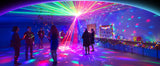
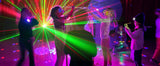
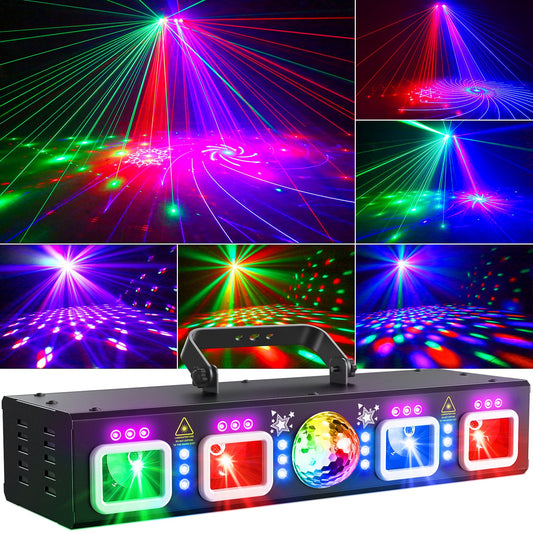
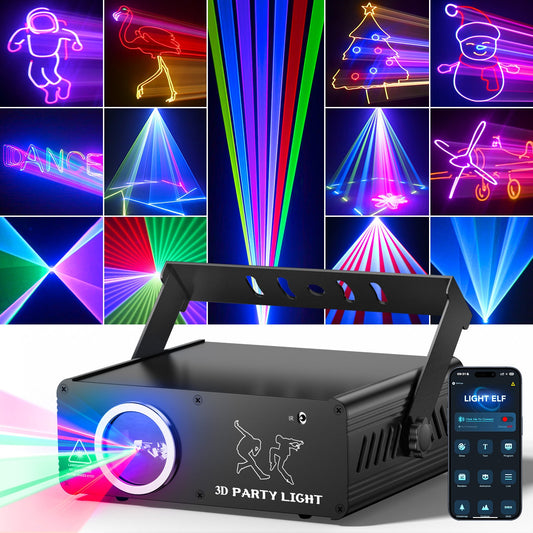
This is the "something is happening" layer. A laser projector throws beams; a derby or 6-in-1 disco light throws rotating patterns and strobe. For a first rig, a 6-in-1 disco light on a stand or a 3D RGB laser gives you movement without learning to program. Pair it with the wash and the room reads as "designed."
The stand
Fixtures on the floor blind the front row and light knees. A DJ light with stand or a dedicated tripod kit lifts everything to 1.5–2m, where the light actually covers the room and stays out of eyes. Stability matters here — a tipped stand is the fastest way to end a gig. Our safety guide covers stand loading and weighting.
Control: sound-activated, app, DMX
This is the decision that decides whether you enjoy the gig or fight the gear.
- Sound-activated: the fixture listens to the music and reacts. Zero setup, zero attention during the night. For a first rig, this is the default — set it and forget it.
- App-controlled: your phone becomes the controller. You get scenes, color picks, and sometimes beat sync, with more intentionality than sound-active and still low effort. The app-controlled party light is a good example.
- DMX: the "real" control protocol. Total precision, but you're programming cues. Save it for when you have enough fixtures that sound-active isn't enough.
For night one, sound-activated or app. You'll know when you've outgrown them.
Sizing the rig to the room
Don't over-buy for the space. A bedroom or small living room wants two fixtures max — more and you're lighting the walls white. A typical house party (living room + kitchen) wants three to four. A small hall or backyard wants six to eight spread across two stands. The fixture-count guide gives exact numbers by room size, and our event-by-environment guide maps rigs to specific venues.
Power and cable basics
Two rules keep a beginner out of trouble. First, never daisy-chain power strips — one fixture trip on a shared strip can take the whole rig down mid-set. Second, know your circuit load: LEDs are efficient, but a half-dozen fixtures plus a laptop and a speaker still adds up. Keep the lighting on its own circuit from the sound where possible. Cable discipline — taped down, ramped over walkways, never a trip wire — is the difference between "pro" and "lawsuit." The safety guide is required reading before your first paid gig.
Building your first rig on a budget
- Starter (~$150): one DJ light with stand (sound-activated) for wash + effect in one. Covers a small room completely.
- Standard ($350–$500): a stand + two par washes + one laser or 6-in-1 effect, all sound-activated or app. A real small-venue rig.
- Growing ($700+): two stands, four to six fixtures, one app-controlled unit for scene control, plus a fog machine once you've run a few gigs. Event-grade without a console.
Beginner mistakes to avoid
- Buying before learning control modes. A DMX-only fixture is a paperweight to a sound-active beginner.
- Aiming at faces. Fixtures on the floor or low stands blind people. Lift them, aim at surfaces and the back wall.
- No backup plan. One fixture dies; if sound-active was your only mode and it's the controller, the room goes dark. Keep it simple and redundant.
- Skipping the stand. Floor fixtures look bad and blind the front row. A stand is not optional.
- Over-lighting a small room. Less is more until you're in a hall.
Frequently asked questions
What's the simplest DJ lighting for a beginner?
One sound-activated DJ light with a stand that combines wash and effect. Add a second par for color coverage once you've run a few gigs.
Sound-activated or app control?
Sound-activated is zero-effort and reacts to the music automatically — ideal for night one. App control adds scenes and intent with little extra work. Both beat DMX for a small rig.
Do I need a DMX controller to start?
No. With three or four sound-activated or app fixtures you don't need DMX at all. Move to DMX only when you want programmed cues across many fixtures.
How many lights for a small house party?
Three to four fixtures across one stand is plenty for a living-room-and-kitchen party. More just washes the walls white. See the room-size guide for exact counts.
Is a stand really necessary?
Yes. Floor fixtures blind the front row and light knees, not the room. A stand lifts fixtures to 1.5–2m where the light actually covers the space and stays out of eyes.
Sources & authoritative references
KeoBin's editorial team verifies technical claims against the following independent standards bodies and references:
- ESTA — ANSI E1.11 (DMX512) control standard
- Wikipedia — DMX512 digital lighting protocol
- Wikipedia — Laser safety (eye & skin hazard guidance)
- Wikipedia — Color temperature
- Illuminating Engineering Society — lighting fundamentals
- Wikipedia — LED lamp (solid-state lighting)
- Wikipedia — Additive color (RGB mixing)
- CIE — International Commission on Illumination
Build your first rig with KeoBin
Start small, run it well. These are the KeoBin fixtures we recommend for a first setup:
- KeoBin DJ Light with Stand — wash + effect in one, lifted off the floor.
- KeoBin Par Lights — RGBWA+UV wash fixtures for color coverage.
- Shop the full Party & DJ Stage Lights collection for sound-activated and app-controlled options.