





Éclairage de scène LED vs traditionnel, et comment choisir entre les projecteurs KeoBin
Tous les quelques années, une évolution technologique modifie discrètement ce qui est réalisable pour les lieux ordinaires, et l'éclairage scénique a connu son tour avec le passage aux LED. La question « LED ou traditionnel ? » est généralement posée comme s'il s'agissait d'une compétition, mais la réponse honnête est plus utile : les LED ont gagné sur presque tous les axes importants pour un événement de petite ou moyenne taille, tandis que quelques cas précis privilégient encore les anciens projecteurs. Ce guide explique clairement les compromis, puis montre comment choisir entre les projecteurs une fois que vous avez décidé de passer aux LED.
Dernière mise à jour : août 2026.
Ce que l'éclairage LED a réellement changé
Avant les LED, la plupart des éclairages scéniques et à effets utilisaient des lampes à incandescence ou halogènes. Elles fonctionnaient, mais elles convertissaient la majeure partie de leur énergie en chaleur et très peu en lumière, ce qui créait trois problèmes récurrents : disjoncteurs qui sautent, gélatines brûlées et projecteurs intouchables en plein spectacle. Les sources LED ont inversé ce rapport. Un PAR LED moderne consomme une fraction de l'énergie pour la même luminosité perçue, fonctionne à froid et mélange les couleurs électroniquement, vous n'avez donc plus besoin de changer physiquement les gélatines pour modifier un look.
Les conséquences pratiques sont ce qui importe pour un opérateur : vous pouvez utiliser plus de projecteurs par circuit, vous pouvez les placer là où la chaleur était autrefois dangereuse, et vous pouvez rappeler n'importe quelle couleur instantanément depuis un contrôleur. Pour un mariage ou un bar, ces trois faits éliminent la plupart des anciennes contraintes.

LED vs traditionnel, côte à côte
Le tableau ci-dessous est une comparaison équitable pour une utilisation événementielle typique. « Traditionnel » désigne ici les PAR halogènes/incandescents et les projecteurs motorisés ; cela ne signifie pas nécessairement « meilleur ».
| Facteur | LED | Traditionnel (halogène) |
|---|---|---|
| Puissance par projecteur | Faible (dizaines de watts) | Élevée (centaines de watts) |
| Dégagement de chaleur | Minimal | Élevé ; nécessite un dégagement |
| Changement de couleur | Instant, mélange électronique | Remplacement manuel de gélatine |
| Durée de vie | Très longue (dizaines de milliers d'heures) | Courte ; les lampes tombent en panne en plein spectacle |
| Options de faisceau | Lavage, zoom et effet dans un seul corps | Souvent à usage unique |
| Coût initial | Plus élevé par projecteur | Plus faible par projecteur |
| Coût total de possession | Plus faible sur la durée | Plus élevé (lampes, énergie, main-d'œuvre) |
La seule colonne où le traditionnel l'emporte sur le papier est le prix initial — et même là, l'écart s'est réduit à mesure que les volumes de LED ont augmenté. Pour quiconque organise plus de quelques événements, les économies de fonctionnement seules justifient généralement le passage.
Choisir par rôle, pas par marque
Une fois que vous avez choisi les LED, la décision suivante concerne la fonction. La plupart des événements nécessitent de remplir quatre rôles, et un appareil est vraiment un outil pour l'un d'eux :
- Lavage / éclairage d'appoint : couleur large et uniforme sur une surface ou dans une pièce. C'est le travail du PAR.
- Effet : mouvement, motif ou faisceau qui ajoute de la vie. Les lasers et les projecteurs de motifs vivent ici.
- Accent : un point lumineux concentré sur une zone clé — table d'honneur, produit, enseigne.
- Ambiant : lueur douce et structurelle, souvent provenant d'une guirlande lumineuse.
Associez l'appareil au rôle, puis comparez les modèles au sein de ce rôle. La fidélité à la marque est moins utile que de se demander « qu'est-ce que cet appareil doit faire le soir même ? »

Une carte pratique des modèles KeoBin
Dans la gamme KeoBin, les luminaires se classent clairement par rôle, ce qui facilite la sélection :
- PAR rechargeable 12x16W — le cheval de bataille pour le lavage et l'éclairage d'appoint ; la batterie signifie pas de câble. Choisissez-le pour la couleur périmétrique et l'accentuation.
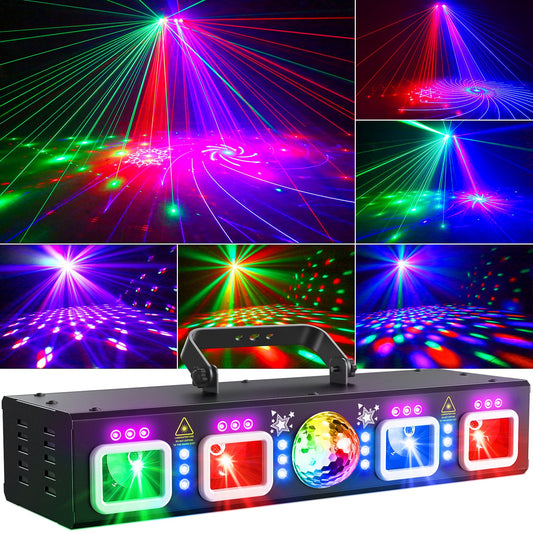
- L2500 6-en-1 — un luminaire disco/effet avec des motifs rotatifs et des textures gobo pour la piste de danse.
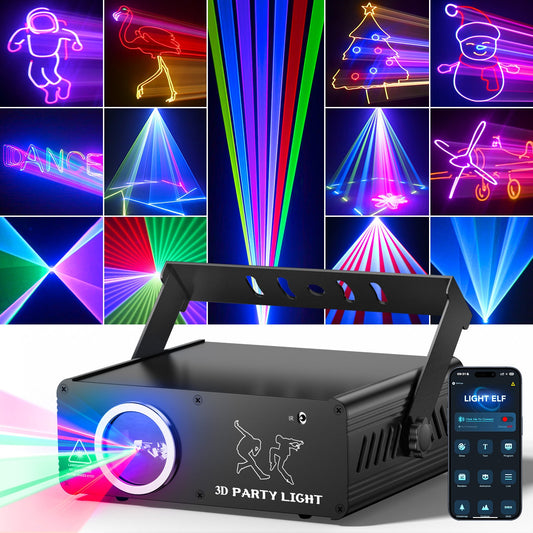
- Laser RVB 3D L2400 — volume de faisceau et mouvement dans toute la pièce ; à associer avec une légère brume.
- Système L2700B 7-en-1 — un kit monté sur pied qui combine lavage et effet pour une installation rapide et portable.
- éclairages d'appoint sur batterie — la couche de base ambiante pour tout cadre intime.
Si vous n'achetez qu'un seul luminaire, achetez un PAR : il fait le plus de tâches. Si vous en achetez deux, ajoutez un effet. Le motif se répète à partir de là. Pour un examen plus approfondi du PAR en particulier, notre guide des éclairages PAR explique le facteur de forme en détail, et la comparaison laser vs boule disco vous aide à choisir la couche d'effet.
Là où les projecteurs traditionnels l'emportent encore
L'honnêteté exige de nommer les exceptions. Les appareils traditionnels conservent un léger avantage dans deux situations :
- Caractère de gradation chaude. Certains designers préfèrent la façon spécifique dont la gradation incandescente « s'estompe » en bas de sa plage. Les LED modernes l'approximent bien mais pas identiquement.
- Inventaires existants. Un lieu déjà câblé et équipé d'instruments halogènes peut ne pas justifier un remplacement pour une utilisation occasionnelle.
Pour un nouvel achat destiné aux mariages, aux bars ou aux flux, aucune des exceptions n'est décisive. Les LED sont la recommandation par défaut.

Alimentation et contrôle, en bref
Les LED simplifient l'alimentation, mais ne la rendent pas facultative. Additionnez la puissance par circuit et répartissez-la sur les prises. Pour le contrôle, le DMX512 reste la norme pour des looks reproductibles ; les modes via application et activés par le son couvrent les fêtes ponctuelles plus simples. L'Illuminating Engineering Society encadre les bonnes pratiques d'éclairage autour du résultat visuel et de l'installation sécurisée, ce qui est la bonne habitude à prendre quel que soit le type de projecteur.
Foire aux questions
Les LED valent-elles vraiment leur coût initial plus élevé ?
Pour plus de quelques événements, oui. Une consommation d'énergie plus faible, une durée de vie plus longue, pas de remplacement de gélatines, et beaucoup moins de main-d'œuvre rendent généralement le coût total de possession inférieur à celui des projecteurs traditionnels dès la première saison.
Ai-je besoin de projecteurs différents pour le lavage et l'effet ?
Généralement oui. Un projecteur de lavage diffuse une lumière large et uniforme ; un projecteur d'effet crée un faisceau ou un motif. Certains appareils combinés existent, mais des outils conçus pour un usage spécifique donnent des résultats plus nets. Le guide de mariage montre comment les couches fonctionnent ensemble.
La couleur des LED peut-elle correspondre aux lumières existantes de mon lieu ?
La plupart des projecteurs LED de qualité vous permettent de régler une température de couleur spécifique, afin que vous puissiez correspondre ou contraster délibérément avec les sources existantes. Testez la correspondance sur un appareil photo avant l'événement si la cohérence des couleurs est importante.
Lectures connexes
- Lumière laser disco vs. boule disco : laquelle est la meilleure pour votre fête ?
- Qu'est-ce qu'un éclairage PAR ? Un guide du débutant sur l'éclairage PAR LED
- Éclairage de scène de mariage : un guide du designer sur l'atmosphère, la superposition et l'équipement fiable
- Éclairages de fête activés par le son vs. DMX vs. application
Comparez l'éclairage de scène LED KeoBin
Projecteurs PAR rechargeables — lavage RVBWA+UV sans câble.
Projecteurs laser de scène — motifs définis et effets de faisceau animés.