





LED vs Traditional Stage Lighting, and How to Choose Between KeoBin Fixtures
Every few years a technology shift quietly changes what is practical for ordinary venues, and stage lighting had its turn with the move to LEDs. The question "LED or traditional?" is usually asked as if it were a contest, but the honest answer is more useful: LEDs won on almost every axis that matters to a small or mid-size event, while a few narrow cases still favor older fixtures. This guide explains the trade-offs plainly and then shows how to choose between fixtures once you have decided to go LED.
Last updated: August 2026.
What LED lighting actually changed
Before LEDs, most stage and effect lighting used incandescent or halogen lamps. They worked, but they converted most of their energy into heat and very little into light, which created three recurring problems: blown breakers, scorched gels, and fixtures you could not touch mid-show. LED sources inverted that ratio. A modern LED par draws a fraction of the power for the same perceived brightness, runs cool, and mixes color electronically so you no longer swap physical gels to change a look.
The practical consequences are what matter to an operator: you can run more fixtures per circuit, you can place them where heat was once dangerous, and you can recall any color instantly from a controller. For a wedding or a bar, those three facts remove most of the old friction.

LED vs traditional, side by side
The table below is a fair comparison for typical event use. "Traditional" here means halogen/incandescent pars and moving fixtures; it does not mean better.
| Factor | LED | Traditional (halogen) |
|---|---|---|
| Power per fixture | Low (tens of watts) | High (hundreds of watts) |
| Heat output | Minimal | High; needs clearance |
| Color change | Instant, electronic mixing | Manual gel swap |
| Lifespan | Very long (tens of thousands of hours) | Short; lamps fail mid-show |
| Beam options | Wash, zoom, and effect in one body | Often single-purpose |
| Upfront cost | Higher per fixture | Lower per fixture |
| Total cost of ownership | Lower over time | Higher (lamps, power, labor) |
The only column where traditional wins on paper is upfront price — and even there, the gap has narrowed as LED volumes have risen. For anyone running more than a handful of events, the operating savings alone usually justify the switch.
Choosing by role, not by brand
Once you have chosen LED, the next decision is about function. Most events need four roles filled, and a fixture is really a tool for one of them:
- Wash / uplight: broad, even color on a surface or across a room. This is the par's job.
- Effect: movement, pattern, or beam that adds life. Lasers and pattern projectors live here.
- Accent: a focused pool on a key area — head table, product, sign.
- Ambient: soft, structural glow, often from string light.
Match the fixture to the role, then compare models within that role. Brand loyalty is less useful than asking "what does this fixture need to do on the night?"

A practical KeoBin model map
Within the KeoBin range, the fixtures sort cleanly by role, which makes selection straightforward:
- 12×16W rechargeable par — the wash and uplight workhorse; battery means no cable run. Choose this for perimeter color and accent.
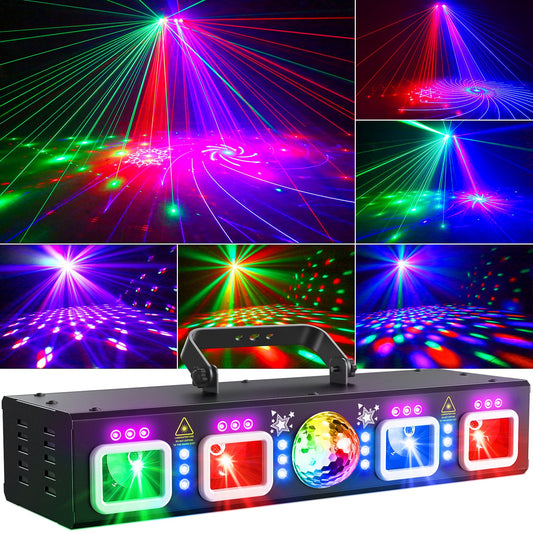
- L2500 6-in-1 — a disco/effect fixture with rotating patterns and gobo textures for the dance floor.
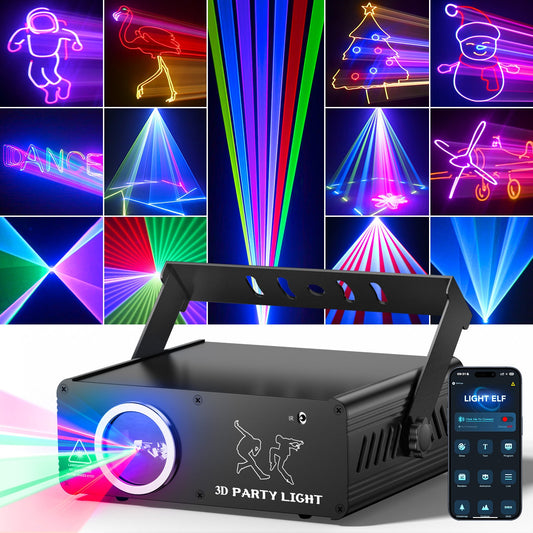
- L2400 3D RGB laser — beam volume and movement across the whole room; pair with light haze.
- L2700B 7-in-1 system — a stand-mounted kit that combines wash and effect for a fast, portable rig.
- battery uplights — the ambient base layer for any intimate setting.
If you only buy one fixture, buy a par: it does the most jobs. If you buy two, add an effect. The pattern repeats from there. For a closer look at the par specifically, our PAR lights guide explains the form factor in detail, and the laser vs disco ball comparison helps you pick the effect layer.
Where traditional fixtures still win
Honesty requires naming the exceptions. Traditional fixtures retain a small edge in two situations:
- Warm dimming character. Some designers prefer the specific way incandescent dimming "rolls off" at the bottom of its range. Modern LEDs approximate this well but not identically.
- Existing inventories. A venue already wired and stocked with halogen instruments may not justify replacement for occasional use.
For a new purchase aimed at weddings, bars, or streams, neither exception is decisive. LEDs are the default recommendation.

Power and control, briefly
LEDs make power easier, not optional. Add up wattage per circuit and split across outlets. For control, DMX512 remains the standard for repeatable looks; app and sound-active modes cover simpler one-off parties. The Illuminating Engineering Society frames good lighting practice around both the visual result and safe installation, which is the right habit to build regardless of fixture type.
Frequently asked questions
Are LEDs really worth the higher upfront cost?
For more than a few events, yes. Lower power, longer life, no gel replacements, and far less labor usually make the total cost of ownership lower than traditional fixtures within the first season.
Do I need different fixtures for wash and effect?
Generally yes. A wash fixture spreads broad, even light; an effect fixture creates beam or pattern. Some combined units exist, but purpose-built tools give cleaner results. The wedding guide shows the layers working together.
Can LED color match my venue's existing lights?
Most quality LED fixtures let you dial a specific color temperature, so you can match or deliberately contrast with existing sources. Test the match on a camera before the event if color consistency matters.
Related reading
- Disco Laser Light vs. Disco Ball Light: Which Is Better for Your Party?
- What Are PAR Lights? A Beginner's Guide to LED PAR Lighting
- Wedding Stage Lighting: A Designer's Guide to Atmosphere, Layering, and Reliable Gear
- Sound-Activated vs DMX vs App-Controlled Party Lights
Compare KeoBin LED Stage Lighting
Rechargeable PAR lights — cable-free RGBWA+UV wash.
Stage laser lights — defined patterns and animated beam effects.